About
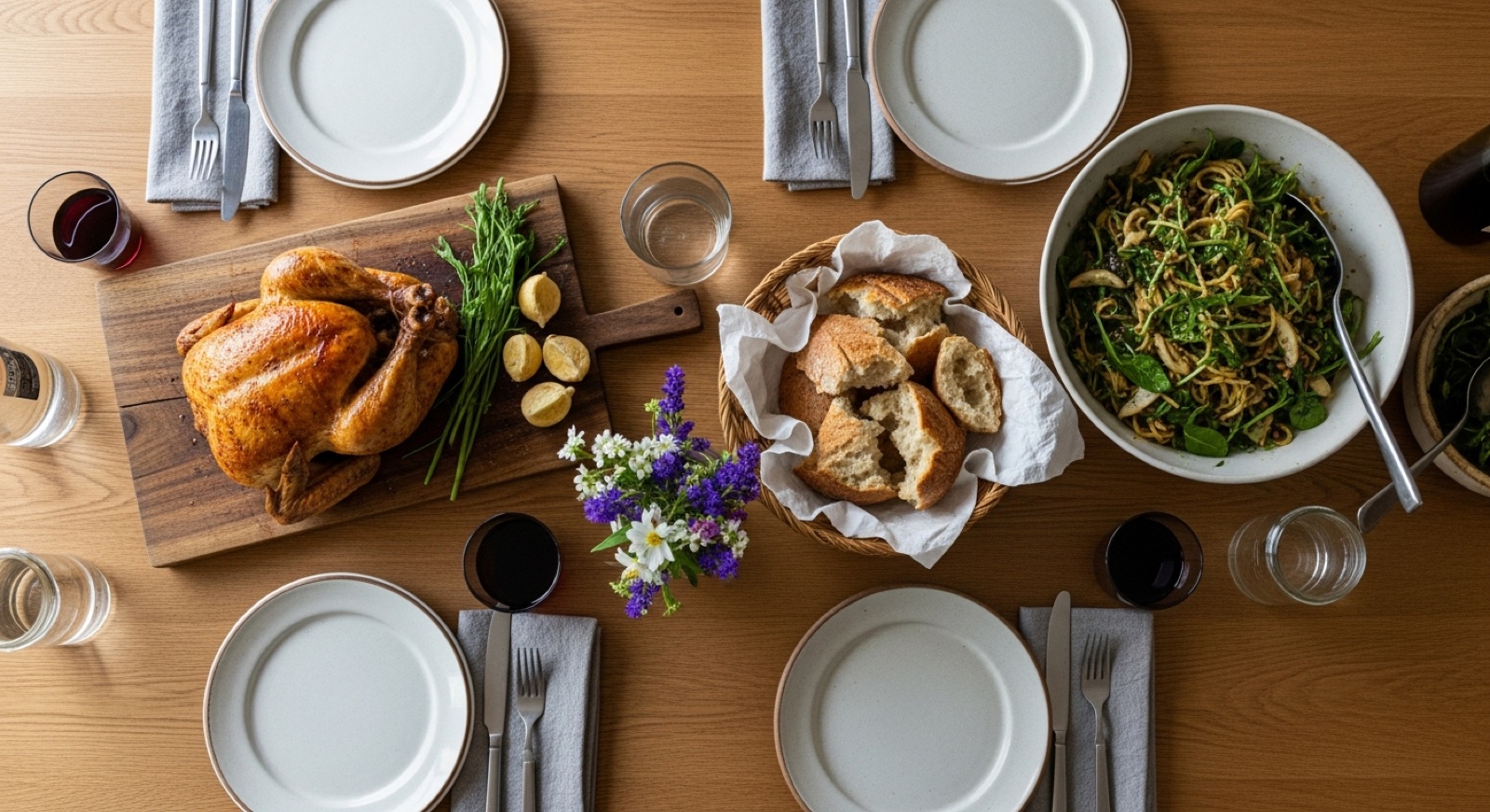
I grew up in country Victoria, in a house where dinner was the only time the whole family was guaranteed to be in the same room at once. My mum could make a roast chicken stretch to feed six people and a neighbour, and my nan taught me that you don't really need to follow the recipe so long as you understand why the recipe works. Those two ideas — that food is the centre of family life, and that cooking is more about understanding than precision — are what this whole site is built on.
Before children, I worked in marketing in Melbourne and cooked the kind of elaborate weekend dinners I had no business attempting on a weekday. Then we had three kids in five years, moved to a slightly-too-small house in the Adelaide Hills, acquired a dog who I now suspect has better instincts than half the family, and suddenly the entire definition of "dinner" had to change. Elaborate didn't work anymore. Fussy didn't work. Most of my favourite recipes didn't work — not because they weren't good, but because they were written for people with three free hours and no one asking why the milk is in the cupboard.
"Big Table is where I write down what actually works when the kitchen is loud, the day has been long, and dinner still needs to be on the table in forty minutes."
So I started writing my own. The ones that survived bedtime, a dog underfoot, a husband who claims to be vegetarian but eats bacon, and a household that contains at least one person who hates whatever I've just cooked at any given moment. These are recipes that have been tested — not in a kitchen with three sous chefs and a stand mixer, but in mine, with chaos. If they work here, they'll work for you.
Tom, who I love very much and who would describe himself as "easygoing about food" while quietly removing every piece of capsicum from his plate. Three kids — Ruby (15, eats everything, refuses to admit it), Frank (12, currently in a "but Mum it has GREEN in it" phase), and Lou (8, will eat whatever the dog is interested in). And Bear, the dog: a sheepdog cross of indeterminate origins who has worked out exactly which family member to position himself near at dinner for maximum scrap reward. I'm not naming names but it's usually Lou.
Weeknight dinners that actually take forty-five minutes. Weekend recipes worth the time investment. Baking for occasions where shop-bought feels wrong. Soups for sick days. Traybakes for the days I have nothing left. The kind of food I cook for my own family, which is to say: nothing fancy, nothing fussy, everything tested at least twice, usually more.
Big Table exists because the food we share is the food that holds a household together. Everyone at the table, nobody complaining. That's the brief. Some days I even achieve it.
— Meg